


TL;DR:
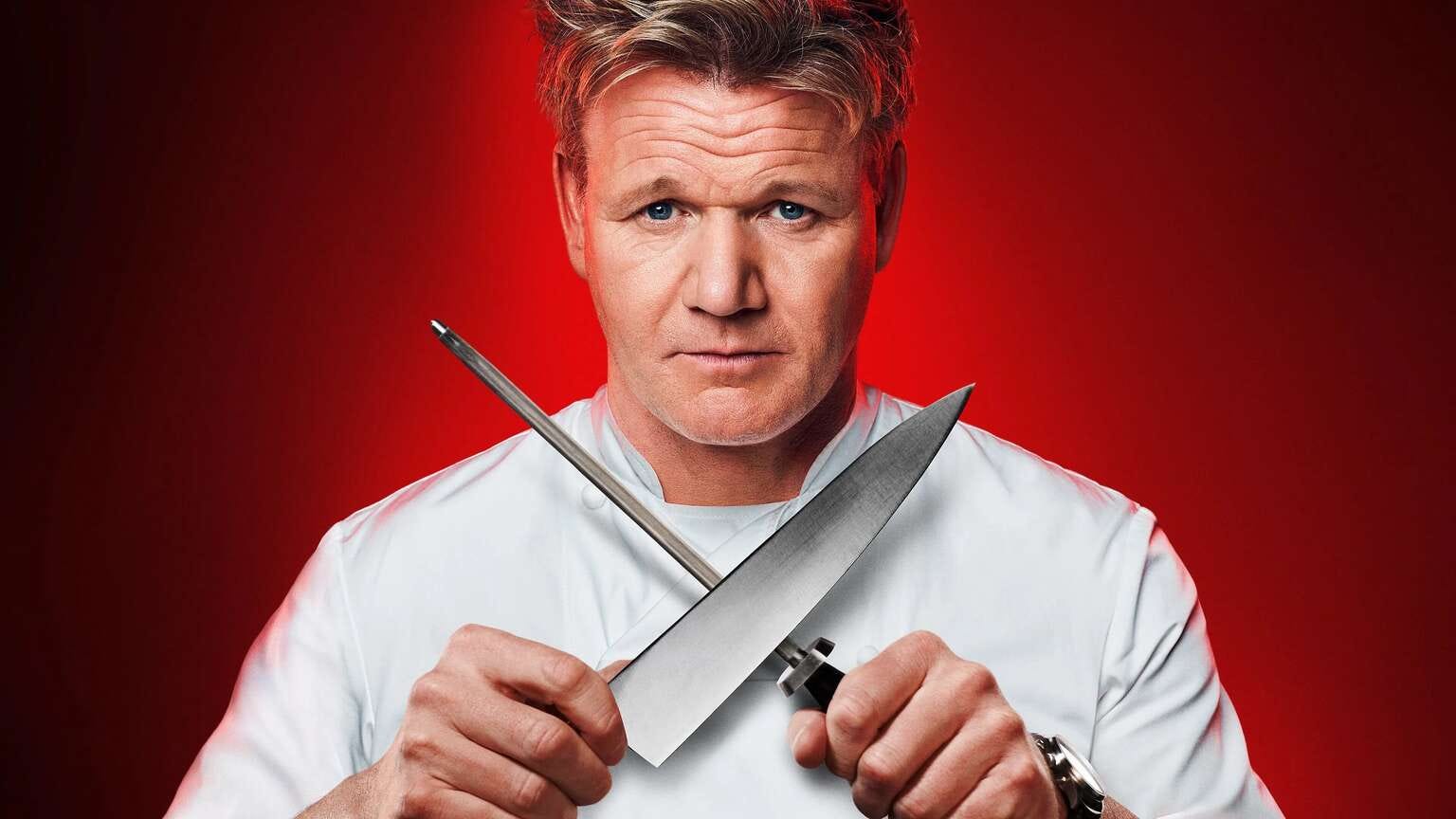
“Let the knife do the work” is what Gordon Ramsay says to people hacking at an onion. A sharp knife, used properly, does the cutting for you.
The product management version: let the process drive the outcome.
If you’re unhappy with an outcome, go back and look at the process that produced it.
—
If you’ve watched more than ten minutes of Gordon Ramsay teaching people to cook, you’ll have heard him say: “let the knife do the work”.
When amateurs pick up a kitchen knife, they often press down hard, and saw back and forth, wrestling the onion into submission. The cuts are ragged, and sooner or you take off a bit of finger.
Now watch Gordon do it. Sharp knife, tip of the blade resting on the board. Fingers tucked, a gentle rocking motion, barely pressing at all. The edge and the weight of the blade do the cutting.
The stuff that made the difference happened before the onion was on the board. He sharpened the knife. He perfected the grip. By the time he’s ready to slice, a perfectly diced onion is pretty much a given.
A knife you have to force is a blunt knife. You fix that, and the outcome fixes itself.
Which brings me back to product management.
The rituals of product management
Earlier in my career, I stressed about the outcomes of rituals a lot.
Is this standup going well? Is this offsite actually adding any value, or are we just eating pastries in a nicer room? OKR reviews would come around and I’d sit there thinking: these are not great. The goals are wrong, or they’re not ambitious enough. How did nobody (me!) spot this a few weeks ago?
As I got more experienced, I slowly realised something that now seems blindingly obvious:
If you’re stressed about the outcome, you’re stressing about the wrong thing.
The product management version of “let the knife do the work” is this: let the process drive the outcome. The ritual — the meeting, the slide, the table, the post — is the diced onion. It’s what falls out at the end. The quality of the output was determined upstream, by the process you had to go through to get there. If the onion looks bad, you don’t glare at the onion. You look at the knife.
This is easier to understand with some examples.
1/ The traffic light
I’ve written before about Guy Rosen’s traffic light framework — the best decision-making framework I’ve ever used. One table: Options down the side, the equities (the factors you care about) across the top. Colour each cell red, amber or green. Capture where each stakeholder stands. Use it to drive the discussion. Use it to record the decision.
You might think the table on the slide is the valuable thing. It’s not. It’s the process that people went though to make the slide exist.
To list the options, you have to go round and ask people — and someone nearly always says “perhaps there’s 4th way”. To agree the equities you have to get people to articulate what they think matters, which is when you discover that two teams are optimising for completely different things. And then as you fill in the cells, people start arguing about whether that one is really amber or green.
Some people see that arguing as petty or pointless. It’s not. That discussion IS the process of alignment-driving, is IS the process of decision-making. The table is a forcing function that makes a group of people contribute their input, surface their disagreements, and work through them. By the time you’re in the meeting room to finally make the decision, most of the work is done.
The process collated the information. The process drove the debate. Let the knife do the work.
2/ OKRs
I used to think the big quarterly OKR review was the work. Get everyone in a room, go through each objective, red/amber/green, done. And I’d sit there stressed that the OKRs were bad.
Of course they were bad. If the first time anyone looks properly at your OKRs is in the review, they’re always going to be bad.
The work isn’t the review. The work is the process that gets you to the review. The drafting them. The back and forth with your eng lead and your data scientist about whether that metric can even move in a quarter. The conversation with your manager about whether it’s ambitious enough. The 10 minutes every week where you look at the chart and ask: are we on track?
If you’ve done all that, the review is a formality. Nice, but not where anything important happens. If you haven’t done it, the review is the first time anyone’s thinking hard about this stuff — and no amount of stressing in the room is going to fix that.
Unhappy with your OKRs? Don’t stress in the review. Fix the process that produced them. Let the knife do the work.
3/ The weekly update
It’s not the posting of the weekly project update that matters. It’s the writing of it.
To write a status update with extreme clarity, you have to go and find out what happened, and actually understand it. Not “CTR is up” but from what to what, and why? What’s blocked, and who’s unblocking it? What changed state this week?
Half the time, it’s in writing the update that you realise something’s off. Nobody has a number for that? Hmm. We said that was shipping Tuesday and it’s now Friday? Hmm. The act of writing it down is a weekly audit of your own understanding of a project, disguised as comms.
The post is almost by-product. Even if nobody ever read it, you’d still have got most of the value. (It should be something people want to read, obviously. But that’s not where all the value gets created.) Let the knife do the work.
So what do you actually do with this?
A few things I’d suggest.
If the outcome’s bad, go upstream. Shit OKRs are a symptom. So is a decision that gets re-litigated three weeks later, and an offsite that produces a nice photo of a whiteboard and nothing else. In each case the fix is liklely somewhere earlier: blunt knife, or bad technique.
Design your rituals so the process does the work. The resulting artefact — the slide, the table, the post — should be a forcing function for the conversations you need to have. Make people fill the traffic light in before the meeting, not during it. Make the update include the from and the to. Put the scorecard on the wall.
The nice side effect of this framing is that you stress about the outcome a lot less. Not because you care less, but because you’ve stopped trying to force the outcome in the room, and started focussing on the process you built to get there.
Let the knife do the work.